catégorie

What Are the Most Effective Corrosion Protection Methods for Fireproof Bus Duct in Chemical Plant Environments?

Standard coatings fail within 2 years in acid-laden plants. Learn proven corrosion protection methods for fireproof bus duct in chemical plant environments.
May 29th,2026 6 Vues

In chemical plants handling chlorine derivatives, sulfuric acid processing, or fertilizer production, we have consistently observed a specific failure pattern: standard fireproof bus duct enclosures showing visible pitting and zinc layer consumption within 18 to 24 months of installation. The fire rating remains intact. The mineral insulation core is undamaged. But the enclosure itself — the first line of defense against an atmosphere that is actively trying to dissolve it — has already begun to fail.

The core tension here is one that product datasheets rarely acknowledge directly. Fire-rated bus duct enclosures are engineered for thermal performance. The materials selected for IEC 60331 or BS 6387 compliance — galvanized steel shells, mica-based insulation systems, inorganic filler compounds — are optimized to survive 800°C+ fire exposure, not sustained immersion in acid mist at pH 3.5. These are different engineering problems, and treating one as a proxy for the other is where most chemical plant corrosion failures begin.

At ZHERUTONG, our experience manufacturing fireproof bus duct for chemical plant projects across Southeast Asia, the Middle East, and South America has given us a detailed picture of where standard protection fails and why. This article maps the specific corrosion mechanisms active in chemical plant environments, then walks through a layered protection methodology — from enclosure material selection through coating systems, joint sealing design, and maintenance protocol.

Why Are Chemical Plants More Destructive Than Other Industrial Settings?

Chemical plants generate a compound corrosion load — acid mist, chloride-laden humidity, and thermally cycled condensation — that acts simultaneously on enclosure surfaces, joint interfaces, and internal conductors, making standard galvanized protection inadequate within the first operational year in many process zones.

Most industrial corrosion guidance treats the problem as a single-variable challenge: control humidity, or control chemical exposure, or select the right coating. Chemical plant environments refuse that simplification. The corrosive agents present are multiple, chemically distinct, and often synergistic — meaning their combined attack rate on metal surfaces exceeds what any single-agent model would predict.

What Specific Corrosive Agents Threaten Bus Duct Enclosures?

The primary corrosive threats in chemical plant environments are sulfur dioxide and hydrogen sulfide from reaction off-gases, hydrochloric acid mist from chlorination processes, and chloride-saturated humidity — each attacking metal enclosures through different electrochemical pathways.

Breaking these down by attack mechanism matters because the protection response differs for each:

Acid mist (HCl, H₂SO₄ aerosols) can drop the effective pH at an enclosure surface to 3.5–4.5 in poorly ventilated process bays. At that pH, zinc sacrificial coatings — the standard protection on pre-galvanized steel — are consumed within months, not years. Once the zinc layer is gone, the base steel is exposed to the same acid atmosphere with no remaining sacrifice layer.

Hydrogen sulfide and SO₂ follow a different pathway. These gases form sulfate and sulfide deposits on copper conductors and steel enclosures, and they accelerate galvanic corrosion at dissimilar metal joints — precisely the locations where copper conductors, steel enclosures, and stainless fasteners meet in the same assembly.

Chloride-laden humidity above 80% RH penetrates micro-gaps in enclosure seams and initiates crevice corrosion at bolt flanges and plug-in unit interfaces. The mechanism is self-amplifying: once chloride ions concentrate in a crevice, the local pH drops further, accelerating the attack rate on the metal surfaces inside that gap.

These agents rarely operate in isolation. A fertilizer plant simultaneously produces ammonia vapor, moisture, and nitric acid aerosol. A chlor-alkali facility combines chlorine gas, HCl mist, and coastal humidity. Under ISO 9223 corrosivity classification, most active chemical plant process zones fall into C4 (high) or C5 (very high) categories — environments where standard galvanized enclosures are explicitly not the appropriate baseline material.

Corrosive Agent

Primary Attack Zone on Bus Duct

Corrosion Form

Typical Onset Timeline

HCl acid mist

Enclosure outer surface, seam edges

Uniform + pitting

6–18 months

H₂S / SO₂

Copper conductor surface, contact joints

Sulfide film, increased resistance

12–24 months

Chloride humidity

Joint interfaces, bolt flanges

Crevice corrosion

8–20 months

Ammonia vapor

Zinc coating, aluminum alloy components

Stress corrosion cracking

18–36 months

How Does Fire Rating Complicate Corrosion Protection?

Fire-rated bus duct enclosures must maintain structural and insulation integrity at temperatures exceeding 800°C, which constrains material choices — many high-performance polymer coatings that excel at corrosion resistance cannot survive the thermal cycling demands of fire-rated assemblies.

Mineral-insulated fireproof bus duct uses inorganic insulation materials — mica, calcium silicate compounds — that are inherently moisture-absorbent. Any breach in enclosure sealing allows corrosive humidity to reach the insulation core, degrading dielectric performance from the inside out. This means the corrosion protection system must also function as a hermetic barrier, not merely a surface treatment.

It is also worth stating explicitly: fire integrity testing under IEC 60331 or BS 6387 does not evaluate corrosion resistance. A product can carry a valid fire rating while being wholly unsuitable for chemical plant deployment without additional corrosion engineering. Procurement teams that rely on fire certification as a proxy for environmental durability will encounter this gap at the 18-month maintenance inspection.

What Are the Proven Corrosion Protection Methods for Fireproof Bus Duct Enclosures?

Effective corrosion protection for fireproof bus duct in chemical plant environments requires a layered approach: starting with enclosure base material selection, followed by a multi-coat surface treatment system, then joint-level sealing design, and finally controlled internal atmosphere management — each layer compensating for the limits of the one before it.

Which Enclosure Base Materials Perform Best in C4/C5 Environments?

For chemical plant zones classified at ISO 9223 C4 or C5, 304/316L stainless steel enclosures or hot-dip galvanized steel with a minimum 85 µm zinc layer provide the most reliable substrate for further coating systems — standard pre-galvanized sheet steel is insufficient as a standalone solution.

The honest comparison between enclosure material options requires acknowledging the trade-offs each carries:

Pre-galvanized sheet steel is the industry default for cost reasons. Its zinc layer typically runs 20–30 µm — adequate for C2 or C3 environments, but consumed rapidly under sustained acid mist exposure. In a C4 zone, this material without additional coating is a liability, not a specification.

Hot-dip galvanized steel at 85–100 µm zinc provides a significantly extended sacrifice period and functions well as a substrate for topcoat application in C4 environments. The thicker zinc layer buys time for the coating system to do its job, and provides a secondary protection mechanism if the topcoat is mechanically damaged during installation.

304 stainless steel offers good general chemical resistance but carries a specific vulnerability: chloride-induced pitting. In high-Cl⁻ environments such as chlor-alkali plants, 304 is not universally suitable despite its apparent corrosion resistance. Engineers specifying 304 for chlorination process zones are making a material selection error that will not become visible until the pitting is already advanced.

316L stainless steel, with its molybdenum addition, provides the chloride resistance that 304 lacks. For chlorination process zones and coastal chemical plants with combined chloride humidity exposure, 316L is the correct specification for enclosures targeting 15+ year service life. The cost premium is justified by the maintenance cost differential over that service period.

One practical note: enclosure material selection must be zone-specific. A single chemical plant may require 316L stainless in the reactor building, hot-dip galvanized steel with dual-layer coating in the utilities corridor, and standard pre-galvanized with enhanced coating in the administrative power distribution areas. Applying a single specification across the entire plant is a cost-optimization decision that creates uneven protection risk.

How Should Anti-Corrosion Coatings Be Selected for Fire Rated Bus Duct Enclosures?

For fire rated bus duct enclosures in chemical plant service, a dual-layer coating system — epoxy primer at 60–80 µm DFT combined with a fluorocarbon or polyurethane topcoat at 40–60 µm DFT — provides the most validated balance of chemical resistance, adhesion durability, and thermal tolerance up to 120°C continuous service temperature.

The anti-corrosion coating selection for fire rated bus duct enclosures is where specification documents most frequently underspecify. Stating "epoxy coating" without defining dry film thickness (DFT) tolerances, topcoat chemistry, and application method is not a specification — it is a statement of intent that leaves all the consequential decisions to the factory floor.

The epoxy primer layer serves as the adhesion foundation and the primary barrier against H₂S and SO₂ penetration. Applied at controlled DFT of 60–80 µm, it provides the chemical resistance that the steel substrate cannot. Under-application — a common field failure point when DFT is not verified at the factory — leaves the coating porous and the barrier function compromised. Our internal production protocol at ZHERUTONG includes DFT verification at multiple points per panel before topcoat application, because we have seen what under-applied primer looks like at the 12-month inspection.

The fluorocarbon topcoat (PVDF or FEVE chemistry) provides superior resistance to HCl and acid mist, UV stability for outdoor routing, and maintained adhesion through thermal cycling. For chemical plant bus duct exposed to direct process atmosphere, this is the preferred topcoat specification. Polyurethane topcoats are a more economical alternative for indoor zones with lower UV exposure and moderate chemical loading — good resistance to ammonia and organic solvents, but not the first choice for chlorination process environments.

Standard alkyd or acrylic topcoats should not be specified for C4/C5 chemical plant service. Their acid resistance is inadequate and failure within 12 months in sustained acid mist exposure is well-documented in our project history.

On salt spray performance: our epoxy plus fluorocarbon dual-layer system on ZHERUTONG fireproof bus duct enclosures has sustained 3,000+ hours in ASTM B117 5% NaCl fog testing without substrate corrosion. We use this as a minimum qualification threshold for chemical plant projects. Procurement teams should request third-party test reports with specific DFT measurements for each layer — not aggregate hours alone — when evaluating any manufacturer's corrosion protection claims.

Why Does Joint and Seam Sealing Design Matter More Than the Coating?

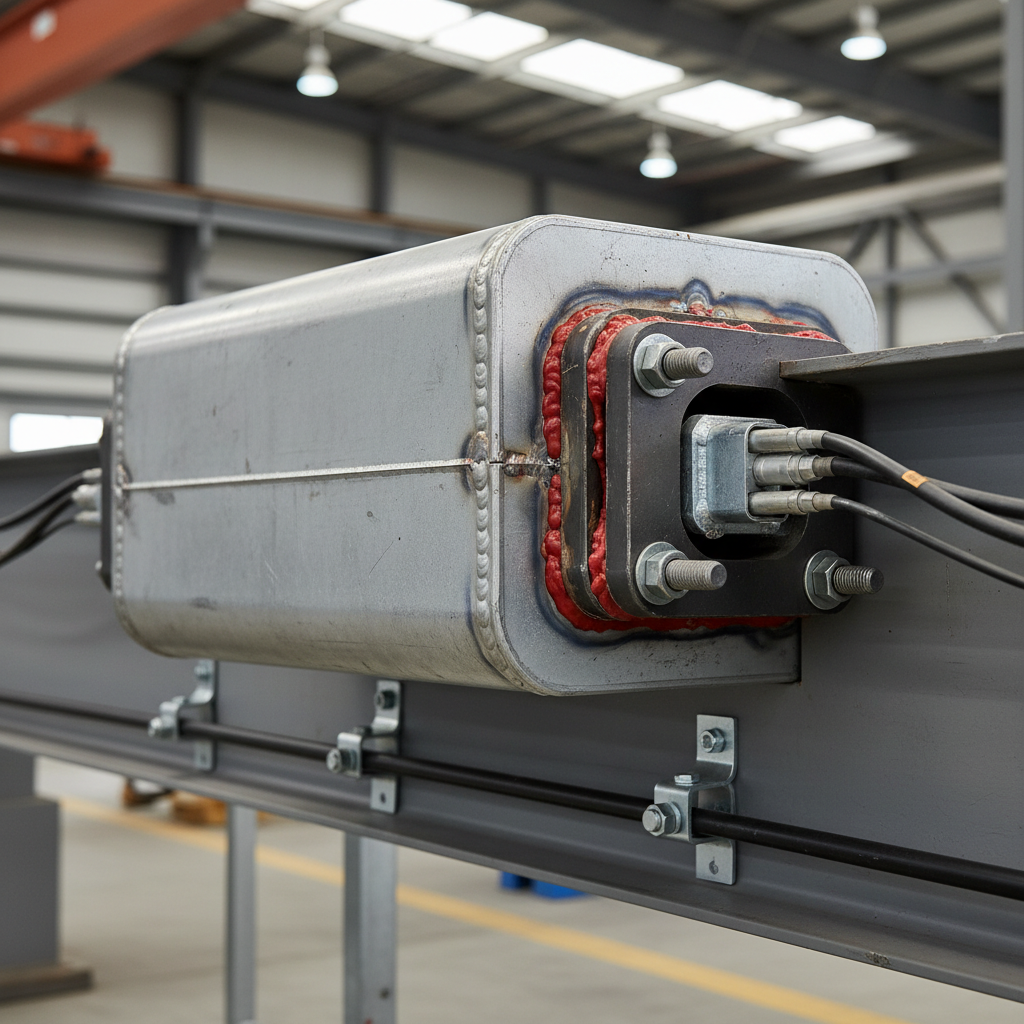
In practice, enclosure coating failures almost never initiate on flat panel surfaces — they begin at joint interfaces, bolt flanges, and plug-in unit apertures where sealing compression is inconsistent or gasket materials are chemically incompatible with the plant atmosphere.

Crevice corrosion at bus duct joints operates through a concentration mechanism: chloride ions accumulate in micro-gaps, local pH drops as the corrosion reaction consumes oxygen and produces acid, and the attack rate inside the crevice accelerates beyond what the external atmosphere alone would produce. This is why a bus duct with excellent flat-panel coating performance can still show joint flange corrosion within the first year — the failure is not a coating problem, it is a sealing design problem.

Gasket material selection for chemical plant service requires matching chemistry to the specific process atmosphere:

EPDM gaskets perform well against ammonia, weak acids, and general humidity — appropriate for fertilizer plant environments where chlorine gas is not present. EPDM is not compatible with sustained chlorine gas exposure and will swell and lose compression in chlor-alkali plant conditions.

Silicone gaskets provide a broader thermal range (–60°C to +200°C) and moderate chemical resistance. Where thermal cycling between ambient and operating temperature is significant, silicone maintains compression better than EPDM over repeated cycles.

PTFE-faced silicone composite gaskets are required for strong acid exposure zones — HCl, H₂SO₄ — where chemical inertness takes priority. PTFE's cold-flow behavior under compression requires controlled bolt torque; over-torquing causes gasket extrusion and under-compression in adjacent areas.

Bolt material at joint flanges is a corrosion initiation point that is consistently underspecified. Standard carbon steel bolts in a C4/C5 atmosphere will begin corroding before the enclosure coating does, and the rust product from bolt corrosion then contaminates the joint interface and accelerates gasket degradation. Specifying A2-70 stainless fasteners as a minimum, with A4-80 for chloride-heavy environments, is not a premium specification — it is the baseline for chemical plant service.

How Does a Real Chemical Plant Project Demonstrate These Methods in Practice?

The most instructive way to validate a corrosion protection methodology is to examine a project where the initial specification was inadequate, the failure mode was identified precisely, and a redesigned protection system produced a documented improvement in service life.

A petrochemical client in Indonesia operating a chlor-alkali production facility engaged ZHERUTONG's engineering team after their original fireproof bus duct installation began showing measurable degradation at 14 months post-commissioning. The facility environment represents one of the most corrosive chemical plant conditions achievable: sustained HCl mist, chlorine gas exposure, and coastal humidity exceeding 85% RH year-round — a C5 classification by any reasonable ISO 9223 assessment.

The original installation used standard pre-galvanized steel enclosures with a single-layer epoxy topcoat. At the 14-month maintenance inspection, site engineers reported visible rust bloom at joint flanges, white zinc corrosion deposits on enclosure panels, and — the operationally significant finding — a measurable increase in contact resistance at two plug-in unit points, indicating internal conductor surface degradation had already begun.

Our site inspection confirmed three concurrent failure mechanisms: the zinc layer at joint edges had been consumed by crevice corrosion; the EPDM gaskets had swollen and lost compression due to chlorine gas exposure (EPDM is incompatible with sustained Cl₂); and the single-layer epoxy topcoat had delaminated at panel edges where DFT was under-applied during factory coating. These three failures were independent in cause but compounding in effect — each one accelerated the progression of the others.

The remediation solution addressed all three failure layers simultaneously. The reactor building segment received 316L stainless steel enclosure replacement. The utilities routing was upgraded to hot-dip galvanized steel with the epoxy plus PVDF fluorocarbon dual-layer coating system. All joint gaskets were replaced with PTFE-faced silicone composite gaskets, and all flange bolts were replaced with A4-80 stainless fasteners. Internal conductors at affected joints received re-tin-plating, and silicone sealant was injected at all plug-in apertures at factory assembly. Enclosure-mounted VCI (vapor corrosion inhibitor) capsules were installed at each joint box to suppress internal atmosphere corrosivity between maintenance cycles.

The 18-month follow-up inspection showed zero measurable enclosure corrosion progression across all remediated sections. Contact resistance at plug-in points returned to within 2% of original commissioning values. Based on documented performance, the client extended their maintenance inspection interval from 6 months to 18 months — a direct operational cost reduction that the initial correct specification would have delivered from day one.

What Installation and Maintenance Practices Determine Long-Term Corrosion Resistance?

A correctly specified fireproof bus duct with the right coating system can still fail within two years in a chemical plant if installation practices compromise enclosure sealing, coating continuity, or joint torque consistency — protection methodology must extend from the factory floor through the first maintenance cycle.

What Installation Errors Most Commonly Trigger Early Corrosion?

The three installation errors most consistently linked to premature corrosion in chemical plant bus duct deployments are: coating damage during handling and field cutting, under-torqued joint bolts that allow gasket bypass, and unsupported spans that induce vibration-driven fretting at contact surfaces.

Coating damage during field installation is the most common and least controlled failure point. When site teams cut, drill, or grind enclosure sections without applying zinc-rich primer or epoxy touch-up to the exposed edges, bare steel in a C4/C5 environment will initiate rust within weeks. Factory-supplied installation documentation should include a mandatory edge treatment protocol as a standard requirement, not a recommendation.

Joint bolt torque specification is frequently absent from installation documents, leaving site teams to apply judgment that varies by individual. PTFE-faced gaskets require lower torque values to avoid cold flow; silicone gaskets require higher compression to achieve the designed seal. Providing a torque verification checklist with values per bolt size and gasket material, as a factory-supplied document, is a straightforward measure that directly affects joint corrosion resistance.

Vibration fretting in chemical plants with rotating equipment generates structural vibration that induces micro-movement at bus duct joints when support intervals exceed recommended spacing. This micro-movement abrades gasket seals, loosens bolt preload over time, and creates the gap conditions that initiate crevice corrosion. In high-vibration zones, support intervals should not exceed 1.5 m — a specification parameter that must be defined in the project layout documents, not left to installation contractor discretion.

Condensation management during commissioning lag is a failure mode that is easy to prevent and consistently overlooked. If bus duct is installed but not energized for an extended construction period, internal condensation can initiate corrosion before the system ever carries load. Temporary enclosure heating or scheduled energization during the construction phase eliminates this risk at minimal cost.

How Should Maintenance Inspection Be Structured for Chemical Plant Bus Duct?

For fireproof bus duct operating in ISO 9223 C4/C5 chemical plant environments, a structured inspection protocol with 12-month maximum intervals — covering coating integrity, joint gasket compression, contact resistance measurement, and internal atmosphere assessment — is the minimum standard for maintaining protection system effectiveness.

A practical inspection framework for chemical plant bus duct runs across four assessment dimensions. Visual inspection covers enclosure surface for rust bloom, coating delamination, white zinc deposits, and discoloration at joint edges — the early indicators that are visible before electrical performance is affected. Mechanical inspection verifies joint bolt torque and checks for gasket extrusion or hardening that indicates compression loss. Electrical inspection uses a micro-ohmmeter to measure contact resistance at plug-in units and joint connections; any reading exceeding 110% of the commissioning baseline should trigger immediate investigation and remediation. Internal inspection at accessible joint boxes checks for moisture ingress or corrosion deposits, and VCI capsules should be replaced per manufacturer schedule rather than on condition.

Thermal imaging during energized operation provides a predictive maintenance layer that complements scheduled inspections. High-resistance joints generate localized heat before they generate visible corrosion or measurable resistance change — infrared imaging identifies these developing failure points early enough to intervene before unplanned downtime occurs.

Maintaining a documented corrosion inspection log per bus duct run, with photographic records at each inspection point, is not administrative overhead — it is the evidence base for warranty assessment, service life planning, and the kind of data that allowed the Indonesian chlor-alkali client to justify extending their inspection interval from 6 to 18 months based on demonstrated performance.

What Does a Complete Corrosion Protection Specification Look Like for Chemical Plant Bus Duct?

A complete corrosion protection specification for fireproof bus duct in chemical plant service should define minimum requirements across five dimensions: enclosure base material, coating system with DFT tolerances, IP/sealing rating, joint hardware materials, and maintenance interval — leaving no dimension to default assumptions.

Specification Dimension

C4 Environment Minimum

C5 / Chloride-Heavy Minimum

Enclosure base material

Hot-dip galvanized steel, 85 µm Zn

316L stainless steel

Coating system

Epoxy primer (60 µm) + PU topcoat (40 µm)

Epoxy primer (80 µm) + PVDF fluorocarbon topcoat (60 µm)

Enclosure IP rating

IP54 minimum

IP65 minimum

Joint gasket material

EPDM (non-chlorine zones) / Silicone

PTFE-faced silicone composite

Joint fasteners

A2-70 stainless steel

A4-80 stainless steel

Salt spray test qualification

1,500 hours ASTM B117 minimum

3,000 hours ASTM B117 minimum

Maximum maintenance interval

18 months

12 months

This table represents a baseline framework, not a universal specification. Actual requirements must be validated against site-specific corrosion survey data — ISO 9223 coupon exposure testing conducted at the actual installation locations is the most reliable method for confirming corrosivity classification before finalizing material selection.

Procurement teams should request factory test reports for coating DFT, salt spray results, and gasket material certifications at the RFQ stage. Product datasheets describe intended performance; test reports document demonstrated performance on actual production materials. The gap between these two documents is where specification risk lives.

At ZHERUTONG, we provide a corrosion environment questionnaire at the RFQ stage to ensure the specification matches actual site conditions before manufacturing begins. The questions worth asking about anti-corrosion coating selection for fire rated bus duct enclosures — process zone classification, dominant corrosive agents, ambient temperature range, maintenance access constraints — are most useful before the purchase order is placed, not after the first inspection reveals a mismatch.

---

FAQ

Q1: Is a higher IP rating always sufficient to protect fireproof bus duct from chemical plant corrosion?

IP rating addresses ingress protection against solid particles and water — it does not evaluate resistance to corrosive gases, acid mist, or chemical vapor. A bus duct can carry an IP65 rating and still suffer rapid enclosure corrosion in a chlor-alkali plant if the enclosure material and coating system are not specified for the chemical exposure. IP rating is necessary but not sufficient.

Q2: Can standard fireproof bus duct be retrofitted with corrosion protection after installation?

Partial retrofitting is possible — field-applied corrosion-resistant coatings, gasket replacement, and VCI atmosphere treatment can extend service life of an existing installation. However, base material limitations such as pre-galvanized steel already showing active corrosion cannot be reversed by surface treatment alone. Retrofit is a remediation measure, not a substitute for correct initial specification.

Q3: How does operating temperature affect the corrosion protection system on fireproof bus duct?

Thermal cycling between ambient and operating temperature creates differential expansion at joint interfaces, which over time degrades gasket compression and can micro-crack coating layers at edges. In chemical plant environments where bus duct also experiences elevated ambient temperatures from process heat, coating systems must be specified for the actual operating temperature range — not just ambient. Both epoxy and fluorocarbon systems should be confirmed stable at the continuous service temperature before specification.

Q4: What is the difference between corrosion protection for the enclosure and protection for the internal conductors?

Enclosure protection — coating, material selection, sealing — is the first line of defense, preventing the external chemical atmosphere from reaching internal components. Internal conductor protection — tin plating, insulation material selection, VCI treatment — is the second line, designed to handle any corrosive atmosphere that penetrates the enclosure. Both layers must be specified independently. Assuming the enclosure will provide complete isolation is a common and costly mistake, particularly in C5 environments where even well-sealed enclosures experience some atmospheric ingress over time.

Q5: How do we verify that a fireproof bus duct manufacturer has genuinely tested their corrosion protection system?

Request third-party salt spray test reports (ASTM B117 or equivalent) with specific DFT measurements for each coating layer, not just total test hours. Ask for coating adhesion test results using cross-cut adhesion per ISO 2409 or equivalent. Verify that test samples used the actual production enclosure material and substrate preparation — not test panels with different surface conditions. Manufacturers who cannot provide these documents at the RFQ stage should be treated with caution.

---

Corrosion protection for fireproof bus duct in chemical plant environments is not a product feature that can be read off a datasheet — it is an engineering decision that requires site-specific analysis, material validation, and a manufacturer capable of translating that analysis into a factory-built solution with documented test evidence behind it.

At ZHERUTONG, we have worked through this process on projects from chlor-alkali plants in Indonesia to fertilizer complexes in the Middle East, and the consistent finding is that the questions worth asking come before the purchase order, not after the first maintenance inspection reveals a specification mismatch.

If you are specifying fireproof bus duct for a chemical plant project and want to share your site corrosion classification, process zone layout, or existing installation issues, send your project requirements or drawings to rtdq@rtbusway.com — we will review the corrosion environment conditions and provide a specification recommendation before you finalize your procurement decision.

CONTACT US

If you have any queries, get in touch today! Don't hesitate. We try to take the extra step for our customer satisfaction.
First Name*
Company Name*
Email*
Last Name
Country
Message*
Leave a message
First Name*
Company Name*
Email*
Last Name
Country
Message*