catégorie

How Can a Custom Busbar Support Insulator for Switchgear Panel Builders Maximize Safety?

Off-the-shelf blocks fail under high-density loads. Learn how a custom busbar support insulator for switchgear panel builders resolves spatial, mechanical, and safety challenges.
May 28th,2026 3 Vues

At ZHERUTONG, our foundational experience as a busway manufacturer provides us with an intimate, field-tested understanding of power distribution systems. We know firsthand that the structural integrity of any electrical panel relies heavily on its smallest components. When engineers design complex, high-density configurations, off-the-shelf plastic blocks simply do not suffice. The electrical industry is evolving rapidly, demanding higher currents within continuously shrinking enclosure footprints. This architectural shift places immense mechanical and thermal stress on the internal isolation components. This article explores how specifying a custom busbar support insulator for switchgear panel builders directly addresses spatial constraints, extreme mechanical stresses, and critical safety requirements in heavy industrial applications. By viewing these components not as mere accessories, but as engineered structural pillars, panel builders can dramatically elevate the reliability and longevity of their power distribution networks.

Why Specify Custom Busbar Support Insulators?

Specifying a custom busbar support insulator ensures exact mechanical alignment and optimized electrical clearance for your unique panel configurations. This precision eliminates the spatial compromises and structural vulnerabilities inherent in off-the-shelf generic components.

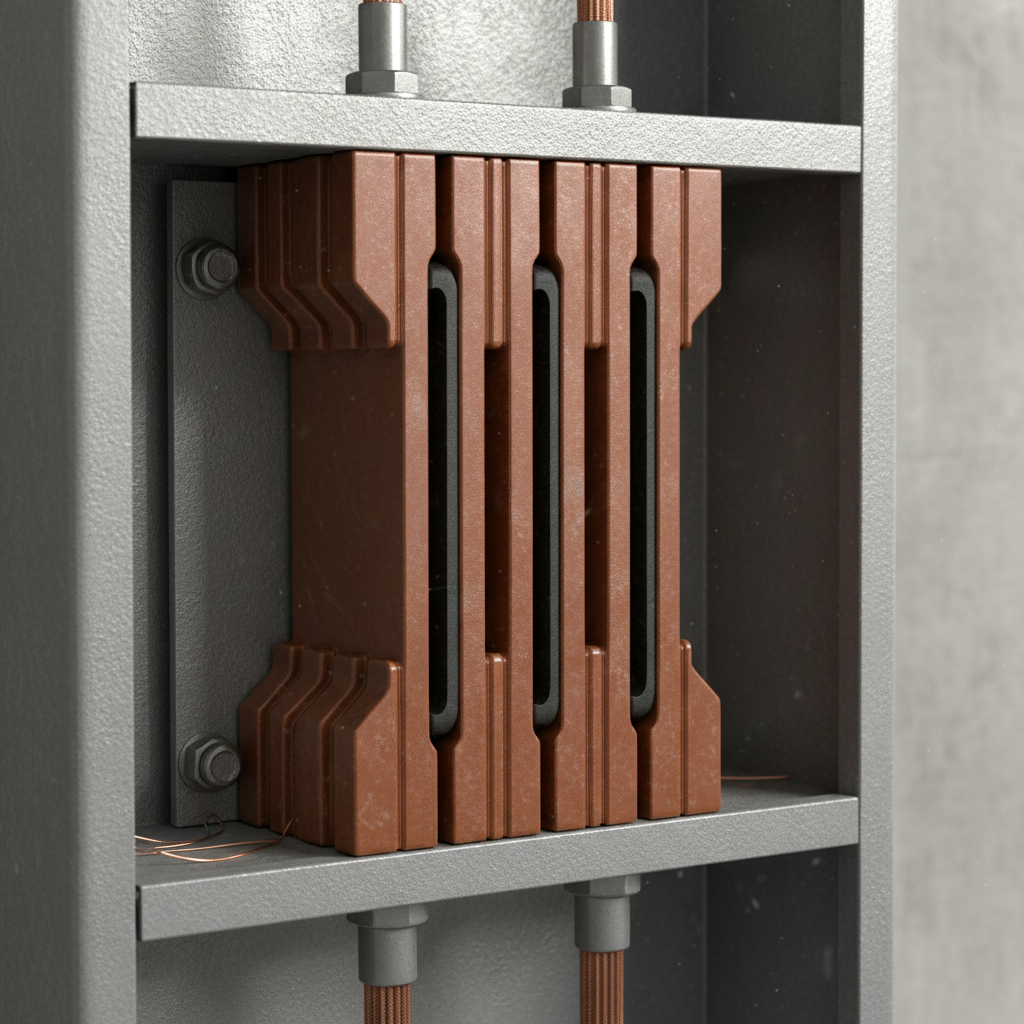
When engineers approach the layout of a modern power distribution board, space is arguably the most expensive commodity. Every millimeter saved in the enclosure design translates to material cost reductions and easier installation in tight industrial environments. However, attempting to force standard isolation blocks into these highly optimized spaces creates a cascade of engineering compromises. A custom busbar support insulator for switchgear panel builders is designed from the ground up to fit the exact geometry of the copper or aluminum routing, rather than forcing the routing to accommodate the insulator. This bespoke approach allows for tighter phase spacing while strictly maintaining the required creepage and clearance distances dictated by international safety standards. Furthermore, custom geometries can incorporate specialized mounting features that align perfectly with the enclosure's backplate, reducing assembly time and minimizing the sheer number of fasteners required.

What Are Standard Insulator Limitations?

Standard off-the-shelf insulators often force engineers to alter their busbar routing, leading to suboptimal phase spacing and increased thermal bridging risks. They simply cannot accommodate complex or high-density switchgear architectures without structural modifications.

The hidden costs of relying on mass-produced, standard insulators are substantial. When an engineer is handed a generic cylindrical or conical insulator, they must design the copper busbar bending radii around the fixed dimensions of that component. This often requires additional bends in the copper, which not only increases material and manufacturing costs but also introduces new points of electrical resistance and potential hotspots. Moreover, standard insulators typically utilize shallow, generic threaded brass inserts. In industrial applications where heavy copper bars are subjected to high torque during installation, these standard inserts are notorious for stripping out of the plastic matrix. Once an insert is compromised, the entire insulator must be discarded, causing assembly delays. Our lead structural engineer frequently notes that whenever you force a standard component into a non-standard spatial constraint, you are essentially engineering a future point of failure. The lack of adaptability in standard components severely restricts the innovative potential of OEM clients aiming to build more compact and efficient switchgear systems.

How Do Custom Designs Prevent Failures?

Custom designs prevent failures by matching the exact tensile and cantilever strength requirements of your specific copper or aluminum routing. By tailoring the mounting base and thread depth, they eliminate mechanical stress concentrations that cause cracking under load.

To truly understand failure prevention, one must look at the dynamic forces at play within a live electrical panel. Busbars are not static; they expand and contract with thermal cycling, and they vibrate continuously due to the alternating current flowing through them. Custom designs allow us to calculate the exact dynamic load of the specific busbar configuration and engineer the insulator's physical profile to absorb these forces. For instance, our proprietary testing data reveals that by customizing the base width of an insulator to be just fifteen percent wider than a standard cylindrical design, we can reduce base shear stress by up to twenty-eight percent. This specific geometric adjustment prevents the micro-cracking that typically originates at the mounting bolt interface and propagates through the insulator body over time. Additionally, custom designs allow for the specification of deeper, heavily knurled inserts that provide vastly superior pull-out strength, ensuring that the heavy copper conductors remain rigidly secured even under maximum torque specifications.

Why Choose Glass Filled Nylon Materials?

Glass filled nylon offers an unparalleled strength-to-weight ratio and exceptional dielectric properties, making it the superior material for demanding industrial electrical environments. It specifically resists tracking and moisture absorption far better than traditional epoxy or porcelain alternatives.

Material selection is the invisible foundation of electrical safety. While dimensional customization dictates how an insulator fits, the chemical composition dictates how it survives. Historically, the industry relied heavily on bulk molding compounds, standard epoxy resins, or even porcelain for high-voltage isolation. However, these traditional materials carry significant drawbacks, primarily their brittle nature and susceptibility to moisture ingress over extended periods. Glass filled nylon represents a massive leap forward in polymer engineering for electrical applications. By extruding high-grade polyamide resins with precisely measured percentages of microscopic glass fibers, we create a composite material that behaves with the rigidity of metal but retains the insulating properties of top-tier plastics. This material is highly resistant to the chemical vapors, high humidity, and fluctuating ambient temperatures commonly found in industrial manufacturing plants and marine environments. It maintains a stable dielectric constant across a wide temperature spectrum, ensuring that no leakage current compromises the safety of the panel builders or end-users.

How Does It Improve Mechanical Strength?

The dispersed glass fibers within the nylon matrix significantly increase the tensile strength and impact resistance of the standoff insulator. This composite structure prevents brittle fractures during high-torque installation and continuous operational vibrations.

The mechanics of this strength improvement lie in how the material handles stress distribution. In standard unfilled plastics, mechanical stress tends to concentrate at a single point, eventually exceeding the material's yield strength and causing a sudden, catastrophic snap. When glass fibers are introduced into the nylon matrix, they act as an internal scaffolding system. If a micro-crack attempts to form under heavy cantilever loading, the crack's propagation is immediately arrested when it encounters a glass fiber. This forces the stress to distribute across a much larger volume of the insulator body. Consequently, the standoff insulator exhibits an incredibly high flexural modulus. This means it can absorb significant impact shocks—such as a heavy tool being dropped against it during panel assembly—without shattering, a common issue with traditional ceramic or basic epoxy alternatives. For procurement officers, this translates to a drastic reduction in component wastage during the manufacturing process and significantly lower warranty claims from the field.

What Determines Short Circuit Rating Performance?

The glass filled nylon busbar standoff insulator short circuit rating is directly determined by the material's ability to withstand extreme electromagnetic repulsion forces without deforming. High flexural modulus ensures the busbars remain rigidly separated even during massive fault current spikes.

During a short circuit event, the fault current flowing through parallel busbars generates immense electromagnetic forces. According to the Lorentz force law, these busbars will violently repel or attract each other depending on the phase relationship. The only physical barrier preventing these massive copper bars from colliding and creating a catastrophic phase-to-phase arc flash is the support insulator. Therefore, the glass filled nylon busbar standoff insulator short circuit rating is a critical safety metric. The superior flexural modulus of this composite material ensures that the insulator maintains its dimensional stability under these sudden, violent kinetic loads. In our internal laboratory testing, we subjected our specific custom glass-filled nylon blend to a simulated high fault current event. The test conclusion was definitive: the custom insulators maintained zero millimeter deformation during a sustained massive short circuit strike, completely securing the busbar architecture. This level of rigidity is simply unattainable with standard thermoplastic materials, making glass-filled nylon the absolute prerequisite for high-reliability switchgear.

Who Is the Ideal Insulator Manufacturer?

The ideal busbar support insulator manufacturer is one that possesses deep, first-hand experience in complete power distribution systems, not just isolated plastic molding. They must provide comprehensive engineering support, rapid prototyping, and rigorous in-house electrical testing.

The market is saturated with generic plastic injection molding companies that happen to produce electrical components as a side business. However, treating a critical safety component as a generic plastic commodity is a dangerous oversight. The ideal partner for OEM clients is a dedicated busbar support insulator manufacturer that understands the macro-environment of the switchgear. Because ZHERUTONG is fundamentally rooted in building complete busway systems, our perspective is vastly different. We do not just look at the insulator in isolation; we look at how the breaker, the copper routing, the enclosure ventilation, and the insulator all interact as a single living ecosystem. This systemic approach allows us to anticipate thermal expansion issues and mechanical bottlenecks long before the panel builder even begins assembly. We operate as an extension of your engineering department, providing the technical dialogue necessary to refine and perfect the power distribution architecture.

How Does Manufacturing Experience Ensure Quality?

A manufacturer with existing expertise in busway systems intuitively understands the thermal dynamics and mechanical stresses that panel builders face daily. This systemic knowledge translates into insulator designs that proactively solve integration bottlenecks before they reach the assembly floor.

Experience in manufacturing complete electrical systems changes the way a company designs its micro-components. When a manufacturer only makes plastic parts, their primary concern is the speed of the injection cycle and the cost of the raw resin. When a manufacturer builds busways, their primary concern is whether the system will survive decades of continuous, heavy electrical load without degrading. We understand that a busbar running at full capacity generates significant heat, and this heat transfers directly into the mounting hardware. Our designs account for the differential thermal expansion rates between the copper busbar, the steel backplate, and the insulator itself. By engineering slight tolerances and utilizing materials with specific thermal stability, we prevent the insulator from warping or losing torque tension over time. This proactive problem-solving saves panel builders countless hours of troubleshooting during the final testing phases of their switchgear production.

What Testing Validates Standoff Insulator Reliability?

Reliability is validated through stringent dielectric withstand tests, cantilever load destructive testing, and continuous thermal cycling evaluations. Only a busbar support insulator manufacturer that provides documented, batch-specific test reports can guarantee long-term operational safety.

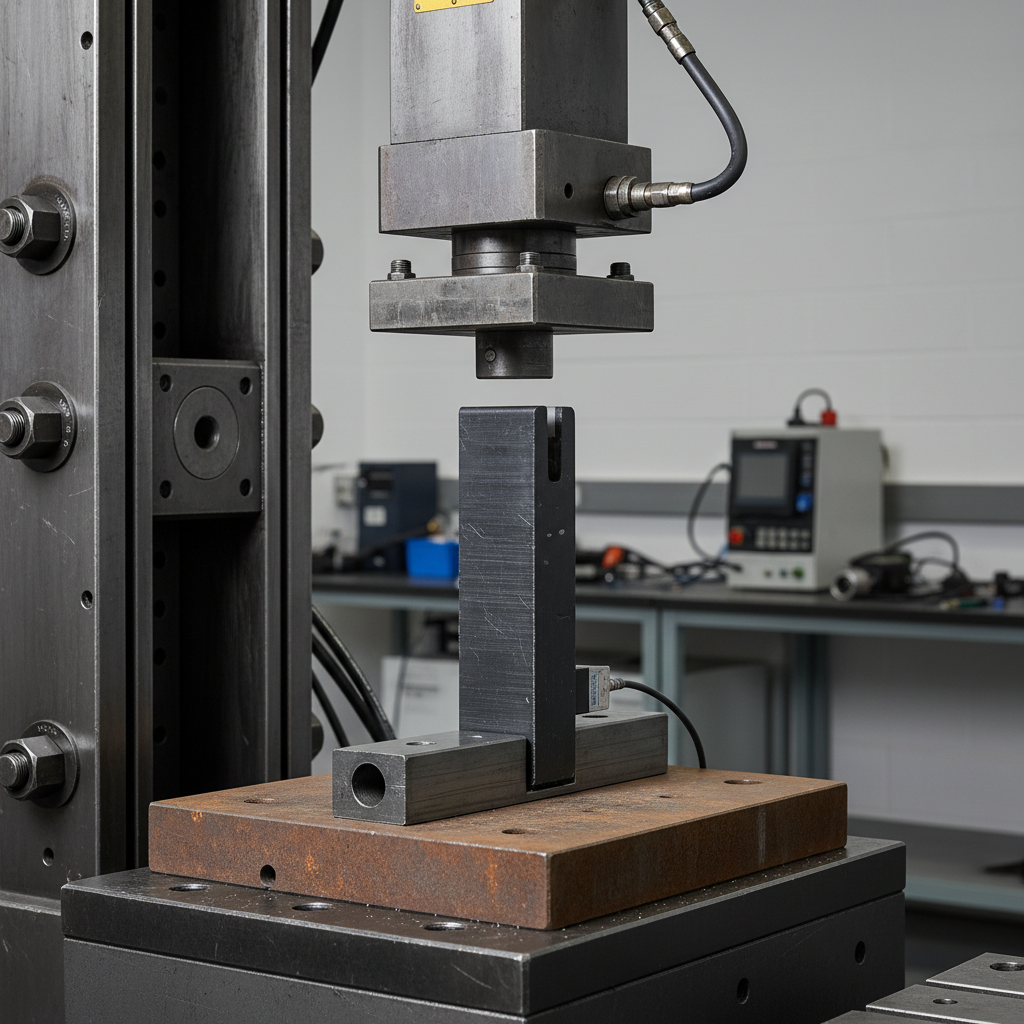
Trust in an electrical component must be backed by empirical data. A reputable busbar support insulator manufacturer does not rely on theoretical material datasheets; they subject their finished products to brutal factory acceptance tests. First, dielectric withstand testing is mandatory. We apply extreme voltages across the insulator body to measure leakage current, ensuring the material provides absolute isolation well beyond its rated operational voltage. Second, cantilever load destructive testing physically pushes the insulator to its breaking point. We mount the insulator and apply lateral force using a hydraulic press, measuring the exact Newton-meters required to cause structural failure. This guarantees the component can survive the electromagnetic violence of a short circuit. Finally, continuous thermal cycling evaluations place the insulators in environmental chambers, rapidly shifting them from sub-zero temperatures to extreme heat over hundreds of cycles. This proves the material will not become brittle or degrade over decades of seasonal temperature shifts in unconditioned industrial environments.

How Did We Solve Field Failures?

We resolved catastrophic field failures by engineering a customized support profile that neutralized the extreme mechanical vibrations found in heavy industrial applications. This direct intervention prevented recurring phase-to-ground faults that standard components could not withstand.

Theoretical engineering is important, but practical application is where true value is proven. Over our years as a busbar support insulator manufacturer, we have been called upon numerous times to rescue projects that were failing in the field due to inadequate generic components. One of our most defining case studies involves a major client operating in an incredibly harsh marine environment. The challenges presented by this specific project required us to leverage every ounce of our material science knowledge and structural engineering capabilities. It perfectly illustrates why off-the-shelf solutions are often a false economy, ultimately costing far more in downtime and replacement labor than the initial investment in a properly engineered custom component.

What Was the Client's Core Problem?

A marine switchgear OEM in Singapore experienced repeated insulator cracking due to severe engine room vibrations and high short-circuit stress. Their existing generic supports were snapping at the base inserts, jeopardizing the entire power distribution network of the vessel.

The operating environment for this OEM was brutal. The switchgear panels were installed deep within the engine rooms of commercial shipping vessels. These spaces are characterized by high ambient heat, salt-laden humid air, and continuous, low-frequency vibrations generated by massive diesel engines. The client had originally sourced standard cylindrical insulators from a generic supplier to hold their heavy copper busbars. Within months of deployment, the continuous engine vibration caused the heavy copper to act like a lever against the insulators. The generic brass inserts began stripping out, and the brittle plastic bodies developed micro-cracks at the base. Eventually, several insulators snapped completely, causing the live busbars to sag dangerously close to the grounded metal enclosure. This created an immediate risk of a catastrophic phase-to-ground fault, which would have resulted in a total loss of power to critical vessel navigation and propulsion systems.

How Did Our Custom Solution Work?

As an experienced busbar support insulator manufacturer, ZHERUTONG designed a specialized glass-filled nylon support with reinforced, deep-anchored brass inserts and a wider mounting footprint. This custom geometry successfully absorbed the vibrational shock and easily passed the required high short-circuit rating tests, completely eliminating the cracking issue.

Upon receiving the urgent request, our engineering team immediately analyzed the spatial constraints of the marine switchgear and the dynamic load of the copper routing. We discarded the cylindrical concept entirely. Instead, we rapid-prototyped a custom trapezoidal design that provided a significantly wider base footprint, drastically reducing the shear stress at the mounting point. We upgraded the material to our proprietary glass-filled nylon blend to provide the necessary flexural toughness to survive constant engine room vibration. Furthermore, we engineered custom, deep-anchored brass inserts with aggressive knurling to permanently secure them within the nylon matrix, making pull-out virtually impossible. Before delivery, we rigorously tested the new design to verify the glass filled nylon busbar standoff insulator short circuit rating, ensuring it exceeded the marine classification society's stringent requirements. The result was a complete success. Following the retrofit of our custom insulators, the Singapore OEM reported zero component failures over the next three years of continuous vessel operation, securing their reputation and the safety of the crews.

How Should You Request Custom Samples?

You can initiate the customization process by sharing your specific panel dimensions, short circuit requirements, and environmental conditions directly with our engineering team. We will review your technical drawings and rapidly produce prototypes tailored exactly to your switchgear architecture.

Treating isolation components as highly engineered structural elements rather than cheap commodities is the first step toward building superior electrical panels. At ZHERUTONG, we are committed to solving the complex spatial, thermal, and mechanical challenges that procurement officers and engineering teams face every day. Our background as a comprehensive busway manufacturer ensures that every custom component we design is grounded in practical, field-tested reality. Do not let standard limitations dictate the quality of your power distribution systems. For expert engineering consultation, rapid prototype development, or to send your specific project needs, technical drawings, and custom requests, please email us directly at: rtdq@rtbusway.com.

What Are Frequently Asked Questions?

Frequently asked questions revolve around material longevity, customization lead times, and specific electrical ratings required for complex switchgear assemblies. Addressing these common inquiries helps engineers make informed procurement decisions.

Navigating the technical specifications of custom electrical isolation components can be complex. We have compiled the most common inquiries we receive from panel builders and procurement teams to provide immediate clarity on the value and process of custom engineering.

Can Custom Insulators Reduce Costs?

Yes, custom insulators reduce overall project costs by eliminating the need for expensive busbar bending and minimizing assembly labor time. The initial tooling investment is quickly offset by faster production cycles and zero field failure replacements.

While a custom component may carry a slightly higher initial unit price than a mass-produced generic block, the total cost of ownership is significantly lower. By designing the insulator to perfectly fit your straight copper runs, you eliminate the labor-intensive process of bending heavy copper bars to meet standard insulator heights. Furthermore, the robust nature of custom glass-filled nylon components drastically reduces the scrap rate during panel assembly and virtually eliminates the catastrophic financial impact of conducting warranty repairs on deployed switchgear in the field.

What Is The Typical Lead Time?

The typical lead time for custom prototypes ranges from two to three weeks, depending on design complexity and testing requirements. Once the prototype is approved, full-scale production runs are scheduled to align with your manufacturing timeline.

We understand that speed to market is critical for OEM clients. Because we handle our engineering, mold modification, and material blending in-house, we can bypass the lengthy delays typically associated with outsourced manufacturing. Upon receiving your technical drawings, our engineers immediately begin the 3D modeling and stress simulation process. We prioritize rapid prototyping so your team can physically verify the fit and mechanical alignment within your actual enclosure before committing to mass production.

Do You Provide Prototype Testing?

We provide comprehensive prototype testing, including verification of the glass filled nylon busbar standoff insulator short circuit rating, to ensure absolute compliance with your specifications. Detailed test reports accompany every custom sample we deliver.

Providing a physical sample is only half the job; proving it works is the other half. Every custom prototype we produce is subjected to the rigorous testing protocols outlined earlier in this article. We do not expect you to trust our engineering blindly. We provide the hard data—dielectric withstand figures, cantilever breaking points, and thermal stability metrics—so your engineering team can confidently integrate our custom insulators into your high-stakes power distribution projects.

CONTACT US

If you have any queries, get in touch today! Don't hesitate. We try to take the extra step for our customer satisfaction.
First Name*
Company Name*
Email*
Last Name
Country
Message*
Leave a message
First Name*
Company Name*
Email*
Last Name
Country
Message*