catégorie

Air Insulated Busbar Trunking System Installation Guide For High Rise Buildings

Follow our air insulated busbar trunking system installation guide for high rise buildings—covering hoisting sequences, joint alignment, and checklists to ensure safe, compliant vertical power distribution.
May 21st,2026 4 Vues

When managing high-rise electrical shafts, MEP contractors frequently face severe space constraints, dangerous voltage drops, and complex vertical alignment issues. As ZHERUTONG, a dedicated busbar trunking manufacturer, we constantly see massive architectural projects delayed simply because installation teams lack a standardized procedure for heavy vertical lifting and precise joint alignment.

This air insulated busbar trunking system installation guide for high rise buildings provides a definitive, step-by-step blueprint to ensure safe, compliant, and efficient vertical power distribution.

By following our manufacturer-level operational tutorial, you will master the exact preparation checklists, hoisting sequences, and jointing techniques required to eliminate costly installation errors and secure long-term electrical reliability.

Why Choose Busbars Over Cable Trays?

An air insulated busbar trunking vs cable tray power distribution comparison reveals that busbars offer superior space efficiency, lower voltage drop, and faster vertical deployment.

High-rise buildings demand massive power loads, making traditional copper cable bundles excessively bulky and prone to severe overheating within tight vertical shafts. Thick cables require extensive bending radii and multiple heavy-duty support trays, consuming valuable real estate and complicating future maintenance. An air insulated busbar trunking system handles higher amperages ranging up to six thousand three hundred amps within a compact, rigid metal enclosure, significantly reducing the required shaft footprint.

Always conduct an air insulated busbar trunking vs cable tray power distribution comparison during the initial MEP design phase to accurately calculate spatial savings. Our engineering data shows that replacing a four thousand amp cable tray setup with our air insulated system reduces shaft space requirements by up to forty percent while improving heat dissipation efficiency by fifteen percent.

Furthermore, a detailed air insulated busbar trunking vs cable tray power distribution comparison will demonstrate that the rigid casing prevents the sagging and insulation degradation commonly seen in vertical cable runs over time. By choosing busbars, you eliminate the need for complex cable pulling operations, replacing them with a modular, stackable assembly process that accelerates project completion schedules.

How To Prepare For Vertical Installation?

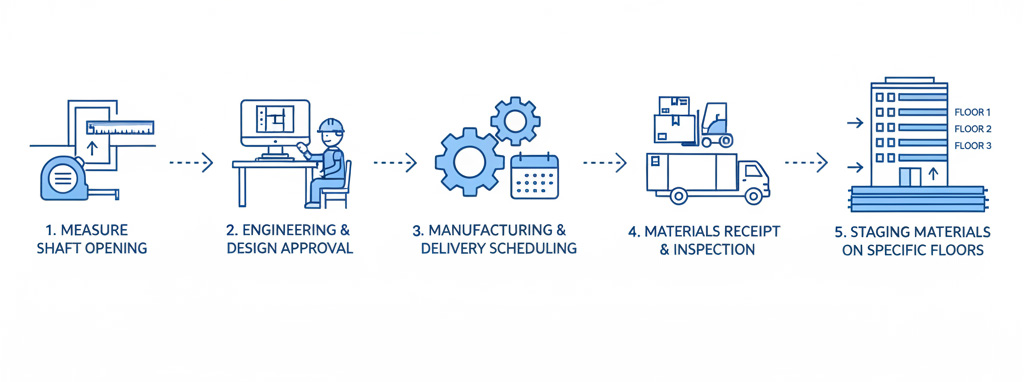
Proper preparation requires verifying shaft dimensions, confirming floor bracket load capacities, and staging the exact busbar segments per floor.

Attempting to hoist heavy busbar sections without exact shaft measurements leads to structural interference and severe safety risks during the lift. Vertical installations demand zero-tolerance alignment. Even a five-millimeter deviation at the base support channel can compound into a major misalignment ten floors higher, rendering joint connections impossible. We recommend a strict pre-hoisting protocol to eliminate these risks. You must establish a clear operational baseline before bringing the lifting winch online. Follow this precise pre-installation checklist to ensure readiness.

Step 1: Check all floor openings. Ensure the vertical shaft dimensions match the approved shop drawings, maintaining a minimum clearance of one hundred millimeters around the busbar casing for proper heat dissipation.

Step 2: Clean the electrical shaft. Remove all construction debris, wet concrete residue, and dust from the routing path to prevent contamination of the internal copper conductors.

Step 3: Install the base support channel. Secure the primary weight-bearing steel channel at the bottom floor using heavy-duty expansion anchors, verifying perfect horizontal leveling with a laser transit.

Step 4: Stage the materials. Transport each specific busbar section to its designated floor based on the serial numbers printed on the casing. Never stack sections randomly at the bottom of the shaft, as this creates logistical bottlenecks during the hoisting phase.

What Are The Exact Installation Steps?

The installation process involves sequential hoisting, precise alignment using spring brackets, and applying exact torque to all joint bolts.

Executing the physical assembly requires strict adherence to mechanical parameters and safety protocols to protect both the equipment and the installation crew. The following sequences outline the critical actions required to construct the vertical run.

How To Execute Hoisting And Positioning?

You must lift the heaviest sections first using calibrated winches and secure them immediately to the pre-drilled spring floor supports.

Step 1: Attach the lifting steel cables. Connect your rigging hardware exclusively to the designated lifting eyes or mounting brackets provided on the busbar section. Never sling chains or ropes directly around the aluminum or steel casing, as this will crush the housing and compromise the internal air insulation gap.

Step 2: Hoist the section vertically. Use a motorized winch with a minimum load capacity of two tons to slowly lift the segment into the shaft. Maintain a steady lifting speed of less than two meters per minute to prevent dangerous swinging that could damage the casing against the concrete walls.

Step 3: Insert the section into the vertical spring hanger. Guide the hoisted busbar into the pre-installed spring bracket located on the floor slab. Ensure the section sits perfectly plumb within the bracket jaws before releasing the winch tension.

Step 4: Adjust the spring tension. Tighten the suspension nuts to compress the internal springs according to the specific weight of the segment. This calibrates the bracket to absorb the static load while allowing for necessary vertical thermal expansion during peak electrical operation.

How To Secure The Joint Connections?

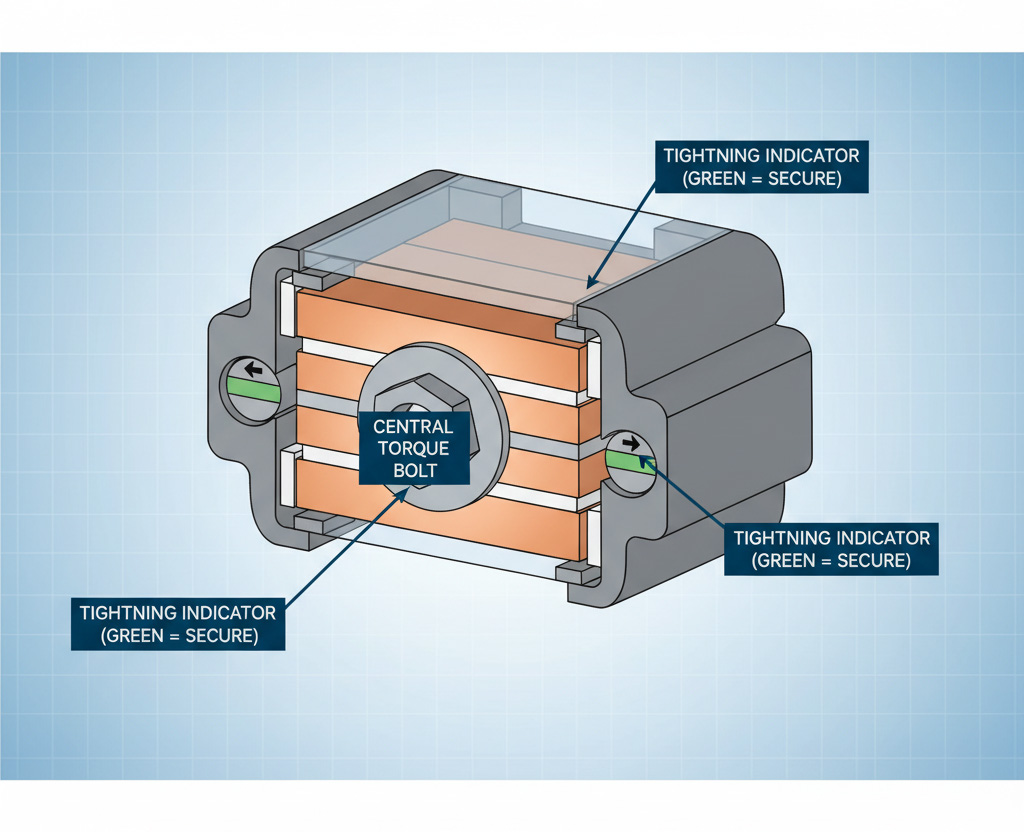
Secure joints by perfectly aligning the phase conductors and tightening the double-headed torque bolts to a precise seventy newton meter limit.

Step 1: Clean the contact surfaces. Wipe down the exposed copper or aluminum conductor ends with a clean, dry, lint-free cloth. Remove any protective tape and inspect for surface oxidation.

Step 2: Slide the joint block into place. Carefully insert the connection block between the two vertically aligned busbar sections. Ensure the phase configurations match perfectly across all conductors to prevent catastrophic short circuits upon energization.

Step 3: Apply the correct torque. Use a calibrated torque wrench to tighten the central double-headed bolt. Turn the wrench steadily until the outer red bolt head shears off completely. This mechanical break indicates that the exact seventy newton meter torque has been reached. As a manufacturer, we emphasize that eighty percent of system failures stem from improper torque applied during this specific step, either causing loose connections that arc or over-tightened bolts that strip the internal threads.

Step 4: Install the joint cover plates. Attach the side covers over the connection block and tighten the retaining screws. Verify that the rubber perimeter gaskets are seated flat to maintain the required ingress protection rating against dust and moisture.

How To Solve Common Installation Challenges?

We overcome severe shaft alignment deviations and thermal expansion risks through custom engineered spring hangers and strict onsite guidance.

Structural settling in ultra-high-rise buildings can warp electrical shafts, making standard rigid installations impossible and threatening the integrity of the power distribution network. When a shaft shifts out of plumb, forcing a perfectly straight air insulated busbar trunking system into the space puts immense mechanical stress on the joint connection blocks, eventually leading to casing fractures and electrical faults.

During a recent forty-five-story commercial tower project in the United Arab Emirates, the local MEP contractor discovered a fifteen-millimeter vertical deviation in the main electrical shaft mid-construction. Traditional rigid brackets would have cracked the busbar casing under the building load. The client urgently contacted ZHERUTONG for a resolution. We immediately manufactured and deployed custom heavy-duty spring expansion units designed specifically for their dimensional anomaly.

Our engineering team guided the local contractors step-by-step via a live video link to install these dynamic supports. These custom hangers successfully absorbed the structural shift and allowed the busbar to maintain its vertical integrity without compromising electrical continuity. Never force a busbar into a misaligned shaft. Always utilize engineered expansion joints and consult your manufacturer for dynamic support solutions that absorb structural shifts safely.

Mastering the air insulated busbar trunking system requires strict adherence to preparation checklists, precise vertical lifting sequences, and exact mechanical torque specifications. By executing these manufacturer-approved steps, your high-rise power distribution infrastructure will achieve maximum operational safety and longevity.

As a dedicated manufacturer, ZHERUTONG is committed to solving your most complex electrical distribution challenges with precision-engineered products and hands-on expertise. If your next high-rise construction project requires custom-engineered busbar trunking systems, robust vertical support solutions, and expert technical guidance, contact our engineering team through the ZHERUTONG website today to request a detailed project consultation and structural evaluation.

CONTACT US

If you have any queries, get in touch today! Don't hesitate. We try to take the extra step for our customer satisfaction.
First Name*
Company Name*
Email*
Last Name
Country
Message*
Leave a message
First Name*
Company Name*
Email*
Last Name
Country
Message*